Facing your nemesis

IMG_5826.jpg

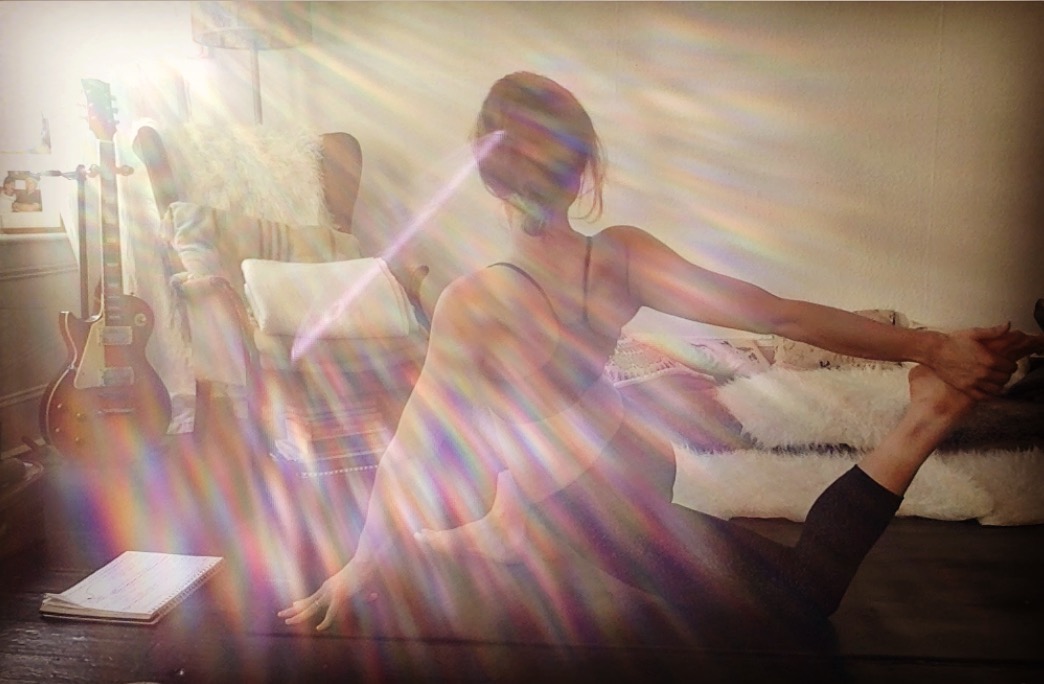
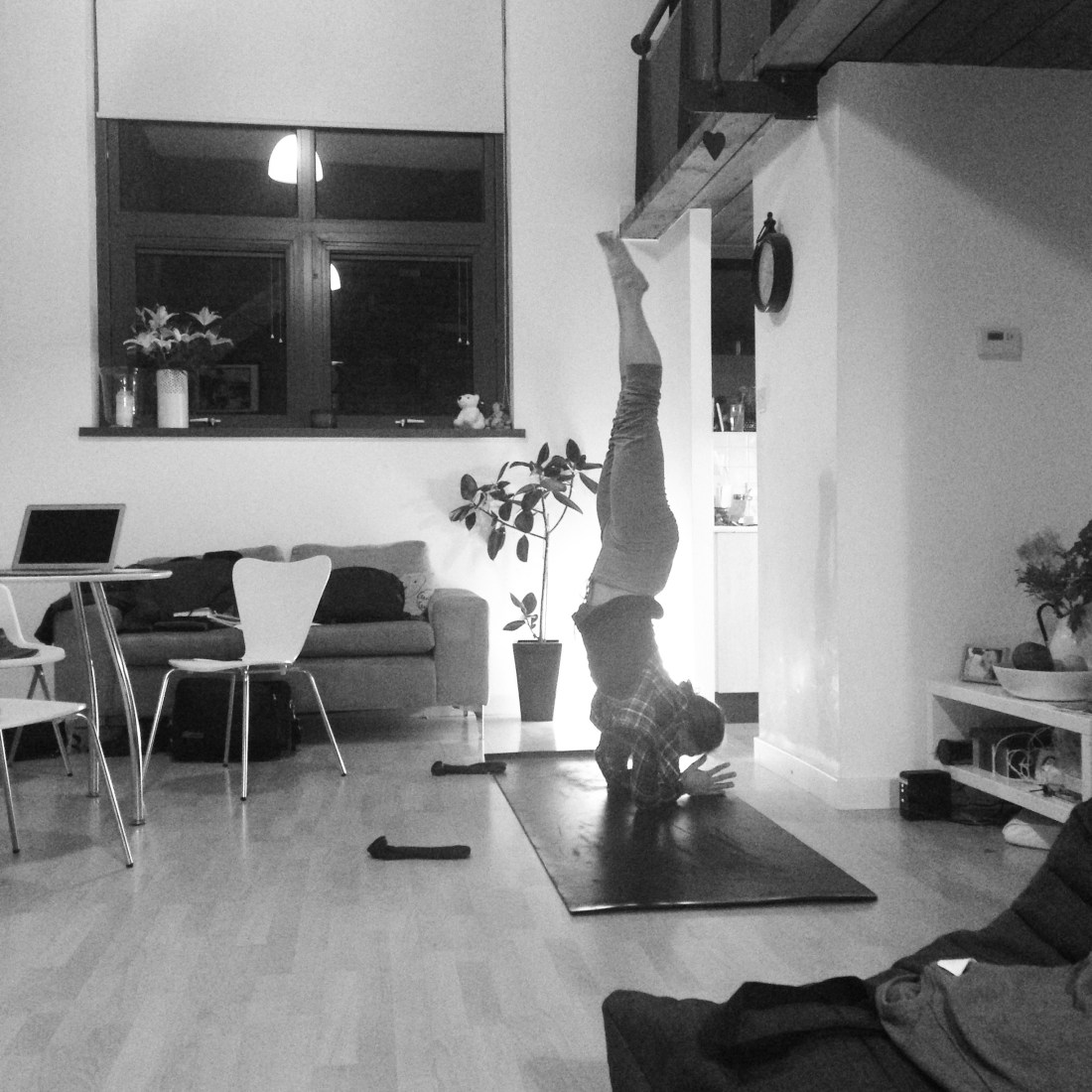
There are loads of poses I can’t do. And I know that you’re not supposed to get hooked on the poses but I still want to be able to do them. All of them. Like Meghan Currie or Sianna or Kino or that amazing Ashtangi lady who’s name I forget. And that’s ok. It’s great to be inspired and want to take our practice to new heights. I want to go deeper into my body and my consciousness, venturing further along the path. But I also want to be able to bust out Pincha Mayurasana because it’s a total bitch that makes my shoulders turn into question marks.

And yeah, I probably do want to capture it on camera and post it on my Instagram. I want people to see that I did it. That I can do it. That I am strong and capable and graceful and balanced. Because that is what I’ve always done. Present a version of myself, to myself and others. I didn’t realise that was what I was doing. I just thought I was supposed to be successful by everyone else’s standards and admitting that I couldn’t do something would make me lesser, somehow.

And so this, of course, is my yoga. My yoga is to recognise the portrait that I paint. We are all responsible for painting our own canvas in this life and I want mine to be authentic. I don’t need to be strong anymore and my perception of what strong is has completely changed anyway. I want to be strong by being vulnerable. I want to offer up my falls and failures and frustrations and fuck ups. My nemesis isn’t a forearm stand. It’s my superhero self who thinks she has to work hard at everything all the time to prove that she’s a good person.

We all have different versions of ourselves and all we can do is build our awareness, learn to disidentify with this small self – or these small selves – and tap deeper into something much more powerful. Something that has nothing to prove because it’s already perfect.

Purnoham. I am full.

Hats off to the Sun

IMG_4324.jpg

Being dedicated to the study of yoga means that sometimes you find yourself watching Yogaglo classes in the bath at 11.30 at night. This was me yesterday. I was evolving my theme for the week and getting inspired by some old skool Anusara classes. Marc Holzman was my master of choice and I marveled at his skillful delivery and layering of the principles of alignment into the body. His theme was discipline and devotion, inspired by a talk with his teacher, the venerable Paul Muller Ortega, who had explained that discipline is love.

When we start to walk a path we have to work. Hard. It’s all new and something is driving us to that work but eventually it stops becoming work. Soon enough, a shift happens and we start to find ourselves on our mat, at our desk, at our easel, with the kids – whatever your calling may be – and it feels right. We want to be there. Eventually, some kind of magic occurs and you want to get up and meditate in the morning. You want to come to yoga more than once a week. You want to develop a home practice. You want to know more about your body, how it moves, why it feels so damn good when you do yoga. You fall in love with your practice and it moves from discipline to devotion. And then you find yourself watching yoga classes in the bath at 11.30 at night.

So what’s all this got to do with sun salutations? Well that’s where it all begins. Those foundational asanas and vinyasas are the first steps towards a dedicated practice and mastering sun salutations takes loving discipline. It takes time to lower down through Chaturanga Dandasana in a straight line without dropping your shoulders or your hips. It takes patience to understand what the hell your teacher means when she tells you to move your ears back or outer rotate your upper arms. It takes dedication to keep coming back so you can get clearer and stronger. It takes discipline but soon enough that will all melt into something like devotion.

I’ve been doing sun salutations for many years and I’m still learning. Every time I hinge at my hips, I’m thinking about the inner rotation of my thighs and the engagement of my core. When I halfway lift, my awareness rests in my shoulderblades. One day I will be able to float from Uttanasana to Chaturanga Dandasana without a sound and, as I shine my heart forward into Urdvha Mukha Svanasana, it’s my little toe and the sides of my neck that hold my attention.

It’s not hard to become devoted to a practice that focuses on the tiniest details, while reminding us of the biggest possible picture. One that connects you to your highest self and reminds you to look up at the sky and bow down to the sun. One that gets you reconnected, realigned and reunited with your body, helping you to build strength, focus and flexibility. Yoga is the practice of empowerment and it is the dedicated practice to your own unfolding. Every time you step on to that mat, you grow. And every creature on this planet is here to do that one thing. Grow. Who wouldn’t be devoted to that?!

Come and step up your sun salutations with me at Yoga Hero and join me afterwards for a soulful candlelit flow. With love and devotion, Collette.


Developing a homie practice

IMG_6004

Cultivating a home practice takes time. It’s one of those aspects of yoga that we can be really resistant to. We want a teacher, a classroom, guidance, adjustment. To be held and to know that we’re ‘doing it right’. Well, firstly, if you’re on a yoga mat then you’ve already got the important part right. You’re saying yes to your body and your desire to grow, play and explore. You are your greatest teacher and every moment is an opportunity for growth. This is one of the deep unfoldings of yoga, particularly when you are alone on your mat, listening to your body speak. Allowing your spirit to rise up and move you in whatever way it feels called. This is where you can really start to refine your practice and initiate the deeper conversation that those yogis keep banging on about.

Here’s some ideas for how to get started.

1. Trust

Getting your mat out and setting yourself up on it can be the hardest thing when you’re trying to develop a home practice. All kinds of fears come up and you doubt yourself – I don’t know enough, I’m not good enough, I’m not experienced enough, I wouldn’t know where to start. But that’s just your egoic mind jibber jabbering. Tell it to shut up and listen a little deeper. Your spirit wants to rise up and be heard. It wants to move and play and grow. It wants your creative energy to be channeled and unleashed and stepping onto the yoga mat will be the spark that kindles the fire of transformation. Trust in yourself and in your body to tell you how to move and how far to go.

2. Set the space

To be perfectly honest, you can roll your yoga mat out anywhere there is a space to roll it out. I used to feel like I couldn’t practice unless I was in the right room at the right time with the right conditions but it’s just not true. Having said that, setting a dedicated space honours your intention to evolve. Your yoga mat bears witness to your transformation, which might sound rather lofty but connecting to your breath and moving silently is a form of communion. You’re tapping into a deeper self and building a resonance and remembrance in your body. If possible, set the space, light a candle, burn some incense and make room for those good intentions. It all creates an imprint for greater self worth.

3. Breathe

Even if you just sit on your mat and watch your breath for five minutes, you have acknowledged a deeper longing to be there. Listen to your breath and begin to move. Don’t think too much about it. Reach up, reach out, sweep, sway, fold, extend. Let your body move and synch up with your breath. Then just see what happens. The minute we remove expectation and judgement, we create a new freedom for ourselves.

4. The power of the playlist

I never used to practice to music but these days I love a good playlist, as long as the music has purpose. I wouldn’t put Taylor Swift on and expect to go deep inside, for example. Your soul can sing to any kind of music but there is something magical about moving in a certain way to certain sounds and vibrations. It can help you tap into a primal energy and get you way out of your noisy head. Spotify is a great resource and my advice would be to avoid anything with lyrics and put together a playlist of different rhythms and moods that you want to experience in your body. Then step onto your mat and play.

5. Sahadja

Sahadja is the spontaneous rising up through the feeling body. This is what happens when you are so dropped in that source opens you up and a sequence will simply reveal itself. “It is the flower that emerges from the nourishment of the breath”, to quote my teacher, and it is one of the most beautiful routes into your practice. Breathe, meditate, put some music on and just start to move. Try not to think about poses or what comes next. Just let it unfold.

6. Namaskars

If Sahadja feels a little daunting then kick things off with a few Namaskars. These can come in the form of sun salutations, moon salutations, full pranam namaskar or a mixture. Have a look online or ask one of your teachers, if you’re unsure. Doing 5 sun salutations a day will do wonders and you’ll find that once you get moving, the shapes will come to you and, before you know it, you’ll be flying from a Virabhadrasana II (Warrior 2) into Ardha Chandrasana (Half Moon) quicker than you can say Urdvha Prasarita Eka Padasana (Standing Split).

7. Go Online

Attending classes is actually quite a new thing in my practice and I spent a good 3 years immersing online. Yogaglo.com was a lifeline for me and enabled me to practice at home whenever I wanted to. I discovered some of the world’s greatest teachers, including three who have gone on to be my teachers in non-virtual life. YouTube has some free classes, if you’re not too keen on paying the £14 per month for Yogaglo, and there are plenty of other options, including CodyApp, Movement for Modern Life and Gaia TV.

8. Get inspired

I could sit and watch people doing yoga all day. It’s just so beautiful and I often geek out to Meghan Currie or Dylan Werner videos. Just to see the yogi in full flow and the human body moving with such grace and power. The balance between stability and freedom, strength and flexibility, deepest connection and inward expansion. Witnessing the full expression of this embodied creativity is just magical and always inspires me to reach up into a handstand or do more core work. You can also find lots of great videos on myth, meditation and mantra. And if the anatomical side of things gets you excited then you have to get the Visible Body App. It. Is. The. Shizbomb.

9. Stick to what you know

What do you know? Write it down. Think of every pose you ever stepped into and write it down. It doesn’t have to be in Sanskrit. Just have a stab at writing down a sequence. It’s so much fun creating sequences and you might surprise yourself. A few Sun Salutations, Triangle, Warrior I, II and III, Half Moon, forward fold, low lunge, high lunge, pigeon. You’ll be surprised what colours you already have in your palette. We are each responsible for painting our own canvas and yoga is the embodiment of this gift.

10. Don’t stick to what you know

One of the most inspiring teachers I have ever had the honour of working with was completely open to all yoga. She practiced as an Ashtangi for 10 years, she studied with Sri K Pattabhi Jois and BKS Iyengar, dedicated 15 years of her life to Anusara, trained as a Kundalini teacher and dived deep into Kashmir Shaivism, Celtic Spirituality, Priestess and Shamanic lineages, wild crafting, herbalism, and body work. She literally has it all going on and it’s a great reminder to keep broadening your palette. To go to different teachers and different classes and open yourself up to the full ‘gamut’ of yogic experience, as Sianna would say. Your home practice can only grow from that kind of nourishment.



Retreat. Everyday

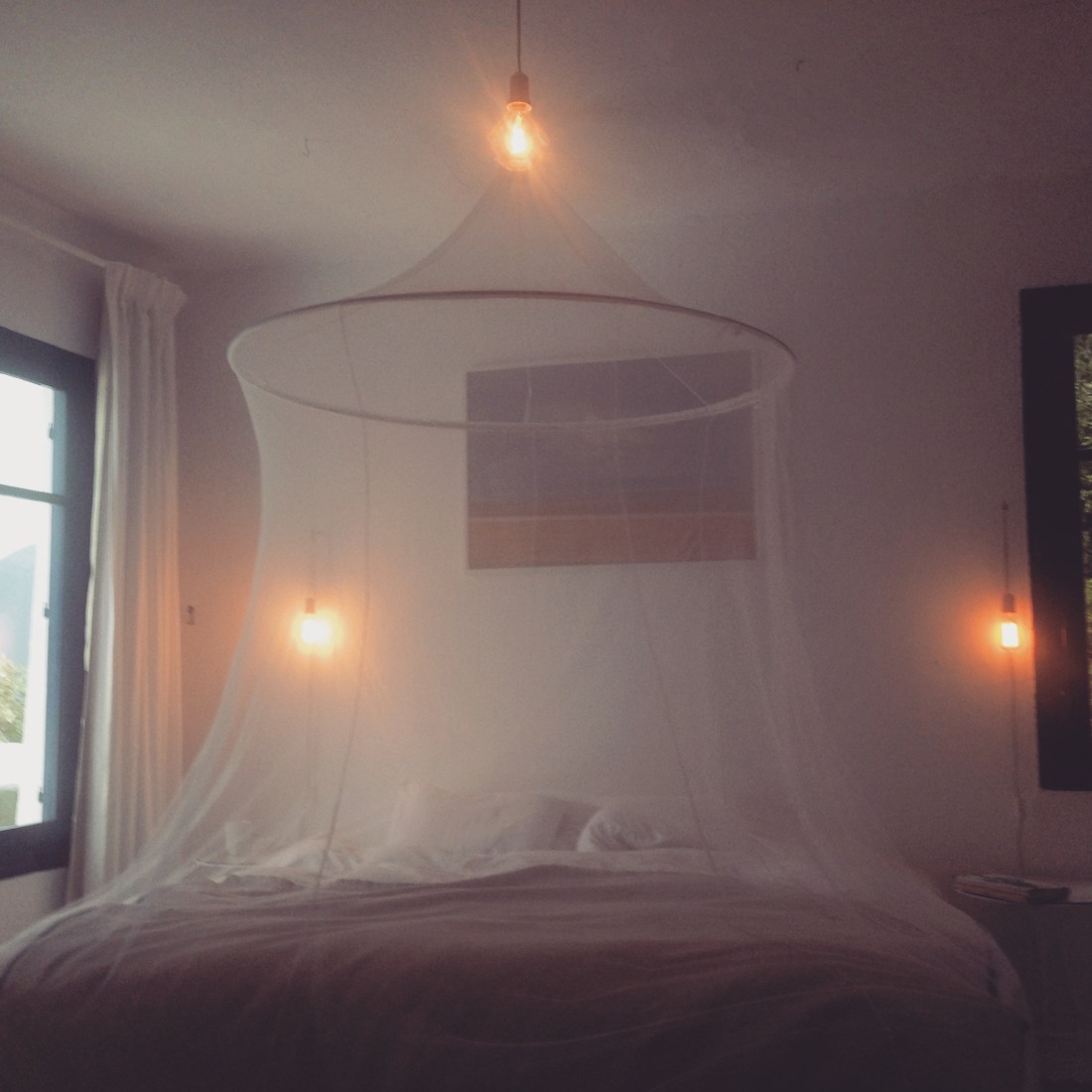
IMG_4548Retreats are wonderful things. They evoke visions of white-clad yogis on sun-blessed yoga platforms, looking out over still cobalt seas. The body sighs at the thought of freshly prepared vegetarian meals, beautifully balanced to rejuvenate your cells so you can be reborn into a better version of yourself. The promise of rest, afternoon naps, directionless walks and dedicated asana practice. Pristine white walls, carefully laid tables and gauzy mosquito nets. Connection, community and permission to do absolutely nothing. Otherwise known as bliss.

Wouldn’t it be nice to go on retreat all the time? Yes. It would. And you can. In fact you absolutely should, as one of the most basic, yet overlooked, of the yogic practices. Having just come back from a weekend with the incredible Christopher Hareesh Wallis, author of Tantra Illuminated, I am reminded of this and totally inspired to go straight to bed.

There are dozens of yogic practices in the Tantric tradition and Vishranti is one of the most fundamental. Without it, you will never bear the full fruit of your spiritual experience, if that’s what floats your boat. So what is this mysterious practice?

“Get enough rest and reduce stimuli”.

We spend so much of our lives in a stress response – fight, flight or freeze –and the bombardment of stimuli ensures we stay there. It keeps our adrenals activated and there’s not a cat in hell’s chance of winding down or truly relaxing. The only way you’re ever going to do that is by having actual rest for 60-120 minutes before sleep. And we all know what that means. No devices. No glowy, shiny, noisy, beeping, electrons in your face. No Louis Theroux, Netflix, Putlocker or Sopranos. No catching up on Facebook, instant messaging or checking your calendar for the 44th time that day. I’m not going to lie; I can feel the resistance as my mind battles with this truth. I love that time with Pete where we cuddle up in bed to watch a movie. How can I possibly impose this new order onto our relationship? Does this mean I have to buy a TV and watch things in the lounge? Do I get a landline? An alarm clock? Should we move house?

What would happen if we had an hour before we went to sleep where we put all devices down?

The prospect of candlelit baths emerges; reading an actual book; meditation; making love; writing in a journal; making a phone call on the new landline. It feels peaceful. It almost feels retreat style peaceful. Like I could go on retreat for an hour everyday. Now you’re talking.

So that’s a possibility. In fact, I need to make it my reality so I’ll let you know how that goes. Another way to carry out Vishranti is to set aside one day a week (or half a day if what I’m going to suggest next sounds like utter insanity) to do nothing. Do nothing. Do nothing. Now, that doesn’t mean do nothing. It just means don’t do anything you would put on your to-do list and don’t go near any devices. Go for a walk, read your book, meditate, sit, nap, make some nourishing food, practice some yoga. Nourish yourself. Go on retreat. Once a week. Just for the day. Turn off all devices and reduce your stimuli. Then see how it transforms your meditation and yoga practice, let alone your life.

And if all of that sounds all too much, you can come on retreat to Ibiza next year and we’ll look after you instead. We spent a week on the island this month searching for the right venue and will be hosting 5 nights at the incredible Can Amonita in both April and September, and a 3 night retreat on an organic farm, also in September.