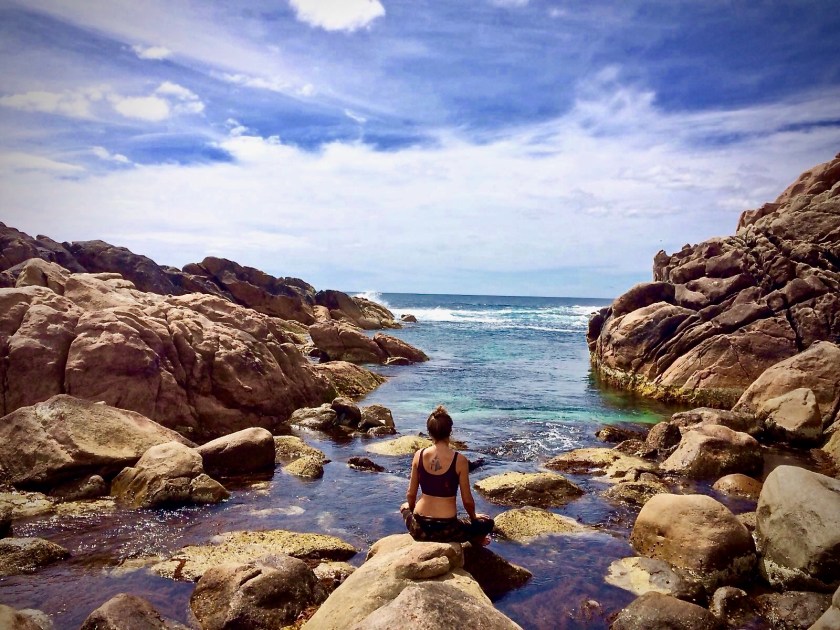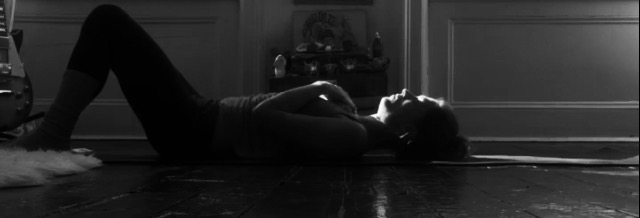
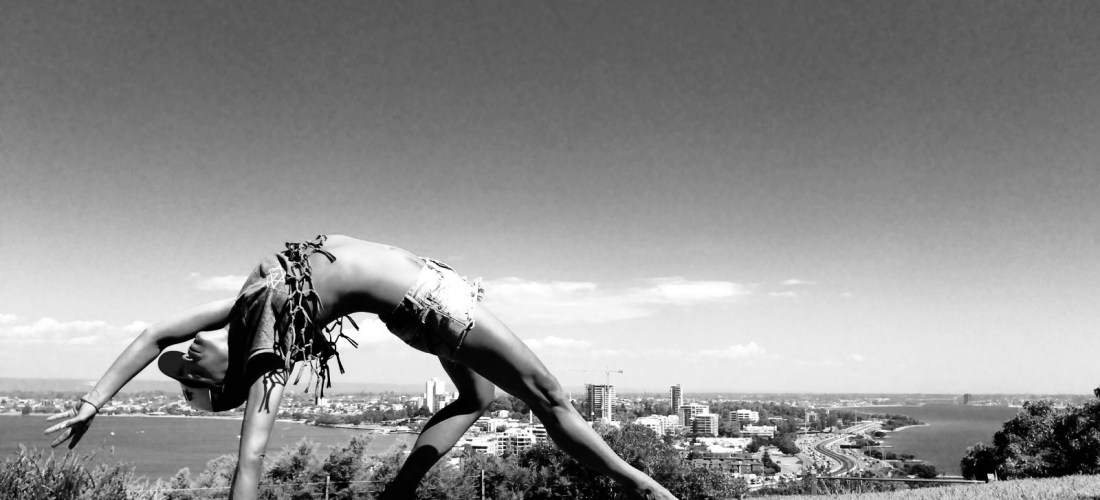
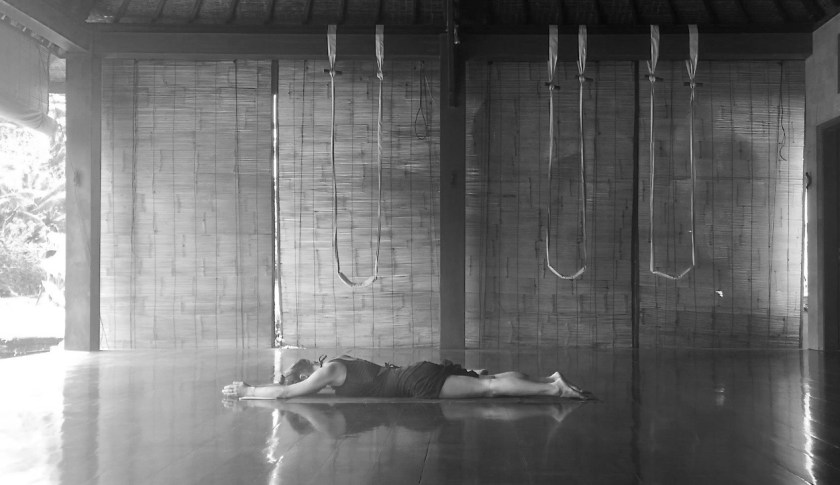
Collette Davis of The Mat Movement practicing yoga asana in Perth Botanical Gardens.

‘Do more yoga’. 5 ways to kickstart your yoga practice

Do more yoga. Always a solid intention for the new year, as we step again and step deeper into the stuff that serve us. The good stuff. The ‘I remember why I do this’ kind of stuff. I’m a big believer in intention and patience and that the shift will come. We know it and we also know that it’s a layering of effort and an accumulation of focused attention that enables our best wishes to take shape. Beating ourselves with a stick and forcing things into submission is basically unkind and undermines us in some kind of twisted irony, so don’t do that. Just keep laying down and layering up your intentions, trust that you’re signing up to the process and that you’ll get there when you’re good and ready. Wherever ‘there’ might be.

As a yoga teacher, people often ask me how often they ‘should’ practice. And I say don’t do anything you think you ‘should’ do and practice as often as you can for as long as you can.

If you have five minutes then step on up to your mat and play. Close your eyes, breathe, listen and open your body this way and that. Be gentle and explore. If you have two hours then go to town. Don’t let a set structure confine you. There are no rules that say you have to practice for at least 30 minutes a day. Five minutes is just fine and letting your body guide you into a dance might not get you closer to handstand but it will bring you nearer to yourself. It will draw you into presence and change the way you feel. And on the days when you have more time, move deeper into the dance, get even closer to yourself and play till it’s time for savasana.

Here’s a few ideas to help you honor any intentions you might have to get onto your yoga mat more regularly in 2018. And please, as ever, feel free to comment, ask, get in touch or reach out for extra yoga support or advice. I’m here and will do my best to offer what I can.

1. Watch tutorials and classes

Online classes were a gift to me at a time when I didn’t have a home practice and was travelling a lot. It’s really a great way to develop your practice, deal with studio shyness and practice on your own terms. I have online classes here and am filming regularly so keep checking in. Yogaglo and movementformodernlife are also invaluable resources with world-class teachers.

2. Sit on it

Roll your mat out, sit on it, then see what happens. Really, that’s it. Go sit on your mat and listen to what’s going on inside you. Start to twist and stretch and take it from there. If you don’t move, then coming to sit and listen is still yoga. Yoga is a means by which we connect and asana is just one of the ways we do that. Sit, be still and maybe journal afterwards.

3. Play music

I never liked to practice to music and then something shifted and a whole new dimension gave way. I have a bunch of playlists on my Spotify account if you’re looking for some sounds, then simply get on your mat and let the music move you. Allow your breath to lead the way and take you into the shapes your body wants to make. Pause inside those shapes and really feel into your experience, the space around you, the earth beneath you. Flow, dance, be guided and let your body take you. If uncertainty, self-doubt and your inner critic pipe up then notice them, thank them and carry on in spite of them.

4. Create space

Three things here. Firstly, if you’re not travelling around, create a sacred space which is all yours. A space in your home where you come to sit, write, move, listen, light candles, get still, breathe and pour your attention into yourself. It doesn’t have to be big or fancy but putting thought and effort into it can give it more pull and resonance.

The second thing is don’t worry about having a sacred space if you’re travelling around. All you need is somewhere to lay down your mat. Close your eyes. Breathe and any space can become sacred.

And thirdly, get a good mat. It transforms your practice and I’ve linked a few of my favorites here:

The lululemon black mat – my trusty mat for years. Strong, durable and with amazing grip. It’s pricey but a great investment and they have an extra long and extra wide option for extra long folks, like Pete 😀

Manduka travel mat – the EKO Superlite is a gift and I’ve taken mine all around the world. It’s affordable, foldable, wipeable, ethical and light as a few feathers. It’s very thin though and is best with a studio mat laid underneath if you have tender knees.

Manduka Pro – I’m not a massive fan as I don’t think it’s particularly grippy but Manduka have solid ethical creds so this guy might be for you.

Lifeforme – similar to the lululemon black mat in grippiness and weight with all the ethical creds to go with it. A win-win if you’re willing to splash out and make a real investment.

5. Get freaky

To watch people move and express themselves physically has always called to me. I devour dance videos and often watch people practicing asana, both with the eye of a teacher and a student but mainly as an appreciation for the art of movement. The artform of asana and it’s powerful grace. Meghan Currie is someone I love to watch for her sensuality but she also likes to dance, move freely and get a little dirty. She owns that sexy body of hers and it’s inspiring to see. Carlos Tao also has an organic movement style and it’s an invitation to let go and be moved. To get a little dirty, a little freaky, a little free from caring. To let go, explore and see what comes through.

Happy 2018 folks. Go splash some colors on that blank canvas of yours and be kind along the way.
Learning to let go through yoga

“When my body thinks, all my flesh has a soul.”

Colette

Imagine you were able to take all the ‘sighs of relief’ you never knew you needed. Each and every one of those stored-up, sealed-up, tucked away exhales that never had the chance to escape. As I release another low, long breath in Downdog, I realise that every exhale on my mat is another something I’ve held on to. A harsh word, a loud sound, an unexpressed feeling, a complex emotion, a fear, a struggle, an aversion. And when I say exhale, I’m not talking about breathing out through my nose when the teacher tells me to. I mean those protracted whispers that take flight from my mouth. The slow release exhales of the let go.

As I come to my mat and my body moves, the pathways begin to open and the information super highway of my nervous system gets the green light. All the held breaths, layered narratives and undigested moments begin to shift into a softening, releasing and dissolving. But it doesn’t always require movement to experience these ancient sighs. It doesn’t mean a dynamic vinyasa class or something vigorously active. I get the same experience from meditation or lying on a bolster in a restorative class for two hours. Those deep, long, healing exhales. Sometimes it’s yawns, moans, sighs, sobs. But when something wants to move, I open the doorway of my mouth and let it all go sailing out. Every. Last. Drop.

And I wonder, ‘wow you must have been holding on to so much’. But of course I have. Of course we all do. We’re holding on all the time. To life. To each other. To what has been and what might be and the letting go is that descent into the present. Into the body. Out of the mind and beyond. The exhale is the letting go of certainty, knowing, owning and attachment. Those sweet sighs are the letting go of judgement, violence, assault and attack. They are the inner movements of what we can’t see. The tracks of our process, the coded messages that move through us so the space can be set for the next experience of ourselves.

“Knowledge has always originated in the body, starting with those sense receptors in the skin that mediate our relationship with the external world.” Marina Benjamin, New Philosopher.

We mediate ‘reality’ through our bodies. Our senses are how we come to interact with the world. Proprioception helping us to feel our way through space. Gravity holding us and pressing down upon us. In classical yoga, sense withdrawal is a drawing in of the senses but not a denial of them. In Tantra it’s part of the practice to embrace the sensorial, tuning into silence by first tuning into sound. We can come into presence when we become aware of all we can sense and that inner gaze is still described as a ‘seeing’. This dance between the seen and the unseen realities can come to us through our experience of embodiment. Of ‘being’ in this sacred human form.

 “Gilles Deleuze […] suggest(s) that experience trumps reason by virtue of exceeding it. Because sense experience is not hampered by any pre-existing assumptions, what the body apprehends opens us up both to novelty and strangeness.” Marina Benjamin.

The body is vast and fascinating and I want to travel down to its molecular details with my awareness. I want to know myself intimately, from my cells to my selves. This body teaches me so much and I have only just started to speak its language. Only just begun to listen to its wisdom. Only just understood that there are secrets and guidance and ancient etchings in these bones. I’m learning how letting go isn’t just something I can ‘do’. It’s something I can ‘allow’. Letting go can be an intellectual, conscious aspect of our practice but through asana we allow the body to let go on its own terms, untying the knots, one exhale at a time.

In this practice of listening,

A moment may come when you just want to lie down.

This is a doorway – surrender.

Fall into the wide-open embrace of life.

You are the instrument breath is playing.

The Radiance Sutras

Let go with us in May or September on retreat ❤

It can be done


“In the depth of winter, I finally learnt that within me lay an invincible summer”.

Albert Camus

It’s October and the shadows have been stretching right the way over my head like a pair of opaque 60 denier tights with no holes for eyes. It’s the mask of a joy thief and this obtuse hosiery has addled my brain leaving me stranded in a place where I am fully myself. That is, I am fully inside my shadow and I’m not denying any of it. This curious period of intimate self-knowledge lasted for around four weeks and was a source of great wonder/amusement/terror for both Pete and myself.

As I emerged from the shadows and lifted the tights for a gasp of air, I found that inside the fibres lay a lurking fear. A loathsome creature with mean teeth, eating away at my hopes and dreams. Opposing my will and almost stopping me from doing almost anything even vaguely dynamic.

We wanted to host a retreat in Bali. I wanted to teach in Ubud. I want to teach. Full stop. It’s time and I miss it and I yearn to be back in community after my long reach inside. And the days and months of self-practice and self-inquiry have served their purpose. It’s time to manifest and create and bring things to life but doubt and hesitation were cultivating a foisty environment that was leaving me to fester.

Maybe we should just go home. Maybe we shouldn’t extend our trip. What are we doing with our lives? What if we fail? What if I’m not good enough? What if I’m supposed to have a semi-detached house and a car and some children and I’m forty soon and how did that happen and and and …

And then I meditated

[…]

I meditate everywhere. In the concrete garden of a Malaysian guesthouse, on the boat surrounded by Indonesian fishermen, overlooking the main road, on the plane, in the bed while Pete is sleeping, on the floor while Pete is typing, in the garden while the kids are playing, on the rocks, on the sand, in the toilet cubicle, in a quiet corner of someone’s roof garden, in the prayer rooms at the airports. I don’t give a shit. When I wait for a yoga class to start, I’m dropping right on in there. I’m tuning in, finding the still frequency beneath all the noise and nothing is going to pull me out. I don’t care if I look like a weirdo – and that, in itself, is huge progress. It’s my secret laboratory where I activate my magic powers and I get present. It’s how I listen and get clear. It’s how I move past the blah blah blah to get real on what is actually happening, why it’s happening and how to move in, through and out of it.

So, as I sat in the shade, safe from the scorch of the Perth sun, peaceful in the garden of my dear old friend. I drank it all in. The unfamiliar sounds of the Australian wildlife. The new language of the Southern birds. The blessing of the cool winds, whipped up from the nearby ocean. The concrete beneath me and the sweetest sounds of the kids squealing with joy in the house behind me. All these anchors calling me in to the sacredness of the moment and each singular element inside of it.

I’m still now and the stillness is running in and through and all around me. I’ve slipped under the sounds and I rest here a while. After maybe twenty minutes I start to ask for guidance. What is the truth? What direction should I take? What do I need to know to move forward? And after a few minutes of stillness these simple words come through, ‘It can be done’.

Now they might seem like pretty obvious words to you. Yes, it can be. Anything can be. But when you’re in a state of doubt and fear and hesitation, those words are far away. And those words didn’t come from my rational brain. It wasn’t an analytical, reasoning, interrogative process that led me to this clear and simple conclusion. It was the deepest part of me telling the voices in my head what the reality was. It can be done. It can all be done. Trust and keep moving in the direction of truth. Move past the critical voices, the doubts and the fears and reach into the highest level of consciousness that you can possibly drop down into. And there you’ll find the guidance you need.

I smiled when the answer came because I knew where it had come from. And when I came out of meditation, I went to see Pete and was all ‘let’s do this’. I was all, yeah man, we rock. I was all clear and confident and grounded in what was true.

So that’s why I meditate. Besides the ripple of bliss that runs through my body when I tune into the stillness. And besides the sanctuary it offers me, wherever I am and whatever is happening. Besides the luxury it affords me as I learn to witness my reactions and see my shadows more clearly. And besides the physical benefits of calming my nervous system and listening to my body-mind. Besides all that, and a whole lot more, it helps me to discern my reality. To move beyond the stories and the limiting beliefs to reach a place of clarity and truth. Where the deepest voice inside of me becomes more familiar and I can learn to recognize my intuition and let it lead the way.

It shows me that it can be done. Whatever it is. And, beyond it all, there is an invincible, endless summer inside that can shed light, warm me up and give me a bit of extra colour when I need it most.

What is self care?

IMG_9954

I’m quick to the keyboard this morning as I drink in the words of Bridget. I’ve been gratefully turning to her Wild Well Project as we’ve moved through india and ourselves. Each new moon and full moon, she freshly presses some head and heart juice and shares it with the community. She invites us to task, contemplate, read and journal. She shares inspirational material, yoga practices, meditations and interviews with some of her wildly well and wise women. And this new moon, the subject is ‘Make your own Medicine’.

“’Self-care’ is a bit of a buzz word at the moment and I have been wondering what does self-care really mean? I often think of self-care more as radical self-love. Self-care is a deep medicine for our mind, body and psyche. And I believe it is different for different people.” Bridget Luff

So what does self-care mean? Sounds obvious doesn’t it. Self. Care. But how do you really nourish yourself? Where do you draw your boundaries so that you get the rest you need? And what do you need to do every day, week, month and year to feel well? These questions have been swimming around me since we decided to take ourselves on a month-long retreat to the cool and calm of the Himalayas and this is what I’ve learnt.

I’ve learnt that my Dad was right and early nights really are radical. I’ve learnt that all the studies are right and eight hours sleep is indeed optimum.  I’ve learnt that my body loves warm food and that my digestion needs grounding bean stews, hearty grains, warming spices and lentil soups – all made to be mouthwateringly tasty by two meter Peter.

And that’s another thing I’ve learnt. Part of my self-care practice is letting someone care for me. I’m an independent human, so not feeling like I have to do everything all the time to be a good person is actually, ironically, conversely, an act of self-care. I’ve also learnt, over the years, that feeling like I have to do all the things is part of my shadow. It’s been driven by a sense of low self-worth where I didn’t feel like I deserved other people’s time and care. I now know better but I’m still afraid to ask for help. All of which leads me to prefer Bridget’s rearticulation of the phrase ‘self-care’ to ‘radical self-love’. How can we come to love ourselves? How can we activate our sense of self worth? Where can we be more generous to our bodies? Who can we invite into our lives for real support? How can we yield more and do less? And what would it feel like to do less?

Through seclusion and inquiry, I’ve learnt to embrace my shy, quiet self. I’ve recognized that I need peace and solitude, as much as relationship and excitement. That’s it’s ok to do less and that I don’t need to achieve all the time.

So. Right now. Without rubbing it in too much. My day pretty much looks like this:

5.30/6am – waking up naturally followed by hot lemon water and Pete

7-7.30am – Pranayama

7.30-9am – Asana

9-9.30am – Meditation

10am – big bowl of porridge

10.30 – back to bed to rest and read

1pm – A bowl of something spicy and hearty followed by one or two of the following, depending on my mood: writing, reading, cleaning, cooking, social media, emailing, typing up my training notes, doing bits of work, planning classes, a walk through the hills to buy some biscuits

4.30 – tea and biscuits then more of the above

6pm – a different bowl of some warming, hearty nourishment then more of the above

8pm – reading in bed

9pm – Nidra and sleep

Yes, I am a smug little yogi. I’m on retreat and it’s something I choose to do to learn what’s good for me. My self-care means slowing down, getting quiet, giving myself some time and really noticing how my mind and body respond. Going into seclusion for a couple of weeks gives us the opportunity to experiment, to settle, to reduce the stimulation and calm our nervous systems. And this is a non-negotiable, annual self-care practice for me. At least two weeks of the year in total seclusion. Ideally in a mountain cabin. With Pete. And bean stew.

When I get back home, I’ll bring a couple of these new offerings in. Like eating warm foods at regular times or getting to bed early but we’ll see how it goes. Over the years, I’ve gradually integrated daily practices but it takes time and if we start beating ourselves with the self-care stick then where’s the love in that?

Do what you can. Find out what self-love, or self-care, means to you. Bring awareness to your patterns. Notice. Experiment. Set some boundaries. And take it from there.

In a couple of weeks we’ll head off to Bangkok to meet our wonderful buddy, Hazel, and I can’t wait for a cold beer. The last one was on Tuesday 18th April. (I promise I’m not counting. I’m just a mega geek and have a daily budget app, which is, btw, an amazing way to stay on track when you’re traveling).

Thanks to Bridget for all the inspiration. These links are pretty much all from her latest post on the WWP.

I died a thousand times

FullSizeRender 2.jpg

“Every yoga practice is an experience of death.”

Nameless Yogi

What is certain? Certainly not the future. So what is happening right now for you?

Listen. Let the sounds reach you. Become aware of the temperature of the air on your skin. The breath that breathes you. The quality of light that surrounds you. What is happening right now in your body? Become aware of your posture. Your shoulders. The slight tension in your jaw or your brow. What can you hear. And smell. And taste. And what is the texture of your emotions as you read these words? How do they find you today?

Take a moment.

Close your eyes.

And listen.

“We practice yoga, not for life but for death. If any of you are practicing for the life you are mistaken.”

I don’t know his name but it’s not important. I’m more interested in the life force that is joyfully animating his slight Indian form. There is a lift and dance in his movements that reflects the impish arc of his smile, widening with his eyes as he teaches from the front. Witty and provocative, he amuses himself as he watches our addled brains lumpishly wrap around the esoteric enquiries of the Yoga Sutras and the Bhagavad Gita.

“The only thing that is certain is death. In pranayama we are controlling the life force, no? We hold our breath. We stop the life that is breathing us.”

In every moment there is a death. Each moment that has just past is gone. To sit inside that moment and this moment and that moment is to live more fully. To experience the moment as it passes away is to live and die in a heartbeat. Or at least, that’s what I thought he was talking about.

What I also thought he was talking about was the power of yoga to transform. That gradual metamorphosis of who we are, how we see ourselves and begin to experience the world. We peel back the layers of conditioning, shedding the old skin that doesn’t fit any more. We begin to notice our recurring patterns, start to see through the traffic of our thoughts, catch ourselves in our shadows and, as we practice, something luminous begins to sing in our words and ways. In how we treat our bodies, listen to our loved ones and get closer to ourselves. As the dead cells fall, we rise up to live.

Asana, meditation, and the ancillary practices, burn and burn and burn till we reach the stillpoint. We move our bodies to still our minds and come home to this expansive state of being that anchors us so fully into the now that everything else diffuses. Through the practices we die a thousand times. And, conversely, the parts of ourselves that we have cast away and denied get to live again. The judgements, the expectations, the chaos and the ideas about who we ‘should’ be are replaced with something far greater. A truer sense of what lies beneath. One that pierces through those tired concepts of ‘self’, allowing them to perish so we can become fuller.

In a previous lecture, our artful guide challenged us to consider that yoga is not union. Yoga is separation. This was dangerous ground, I thought. Yes, we are separating ourselves from our thoughts and our concepts but we can all too easily separate ourselves from our feelings in a bid to ‘transcend’ our ‘suffering’. In my understanding, it is only through uniting with our suffering that it can pass away. We must experience that which is painful to allow it move through. As with death, we can’t avoid it. If we push it away, deny it, separate from it, bypass it, our spirit will die from the toxicity of what remains buried. In contrast, if we recognize what is truly living in us, if we see the certainty of our pain and the root of our suffering then it can dissolve. When we shift from the consumption of thought to the consciousness of feeling, we learn to honour the whole spectrum of human experience and facilitate flow. By not getting caught up in the story that surrounds what is happening, by ‘separating’ our thoughts and ‘uniting’ with our feelings, we become more alive as those concepts die a death.